The Mountain of Legends
KIRKJUFELL · SNÆFELLSNES PENINSULA · ICELAND
In a country shaped by fire, ice and powerful natural forces, few landmarks are as instantly recognizable as Kirkjufell. Rising above the northern coast of Iceland's Snæfellsnes Peninsula, this striking mountain has become one of the most photographed locations in the country and a symbol of Iceland itself.
Its distinctive silhouette dominates the surrounding landscape, standing alone between the sea, lava fields and distant glaciers. Although not among Iceland's highest mountains, Kirkjufell possesses a rare combination of beauty, symmetry and geological character that has captivated photographers, travellers and storytellers from around the world.
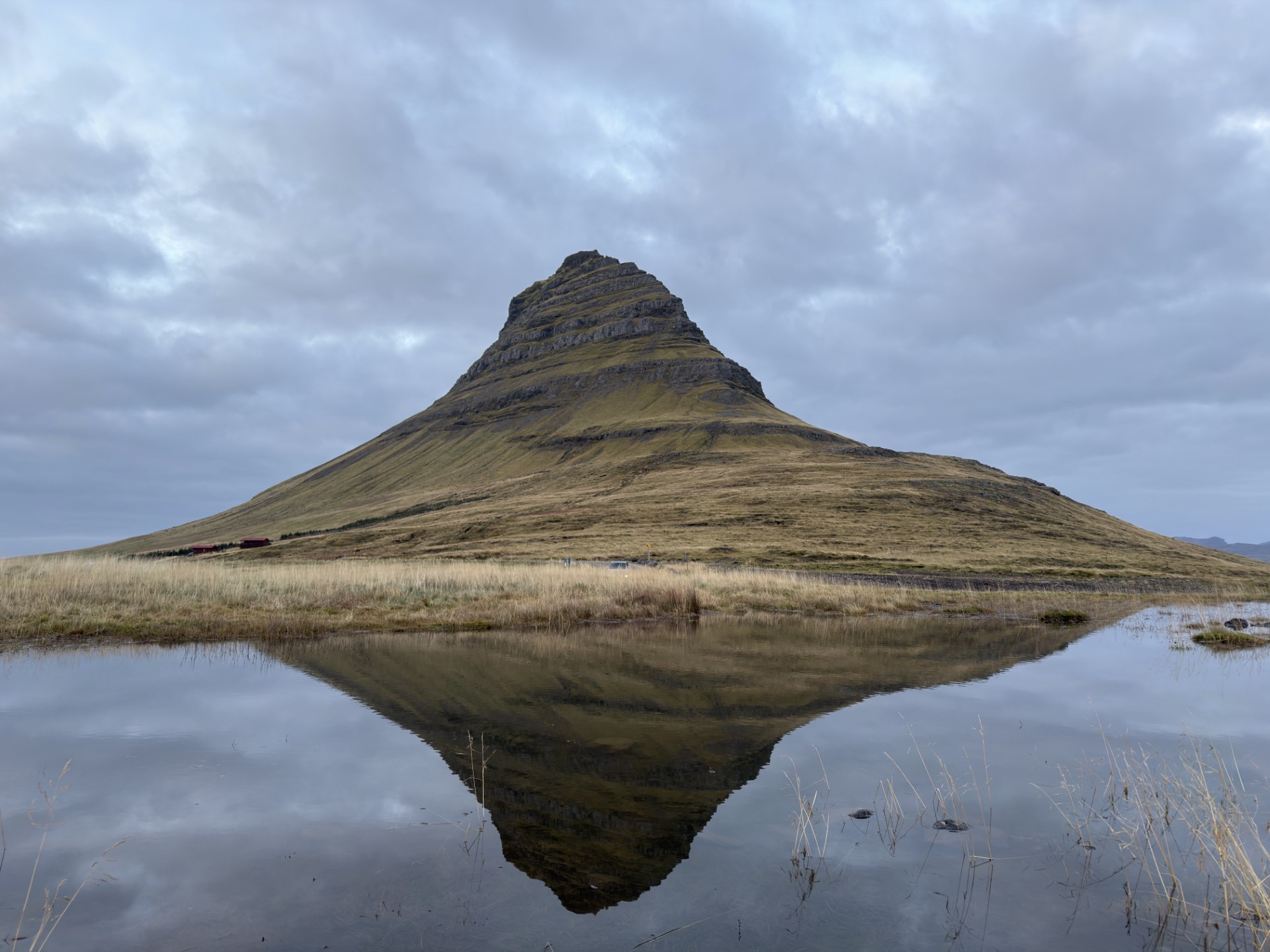
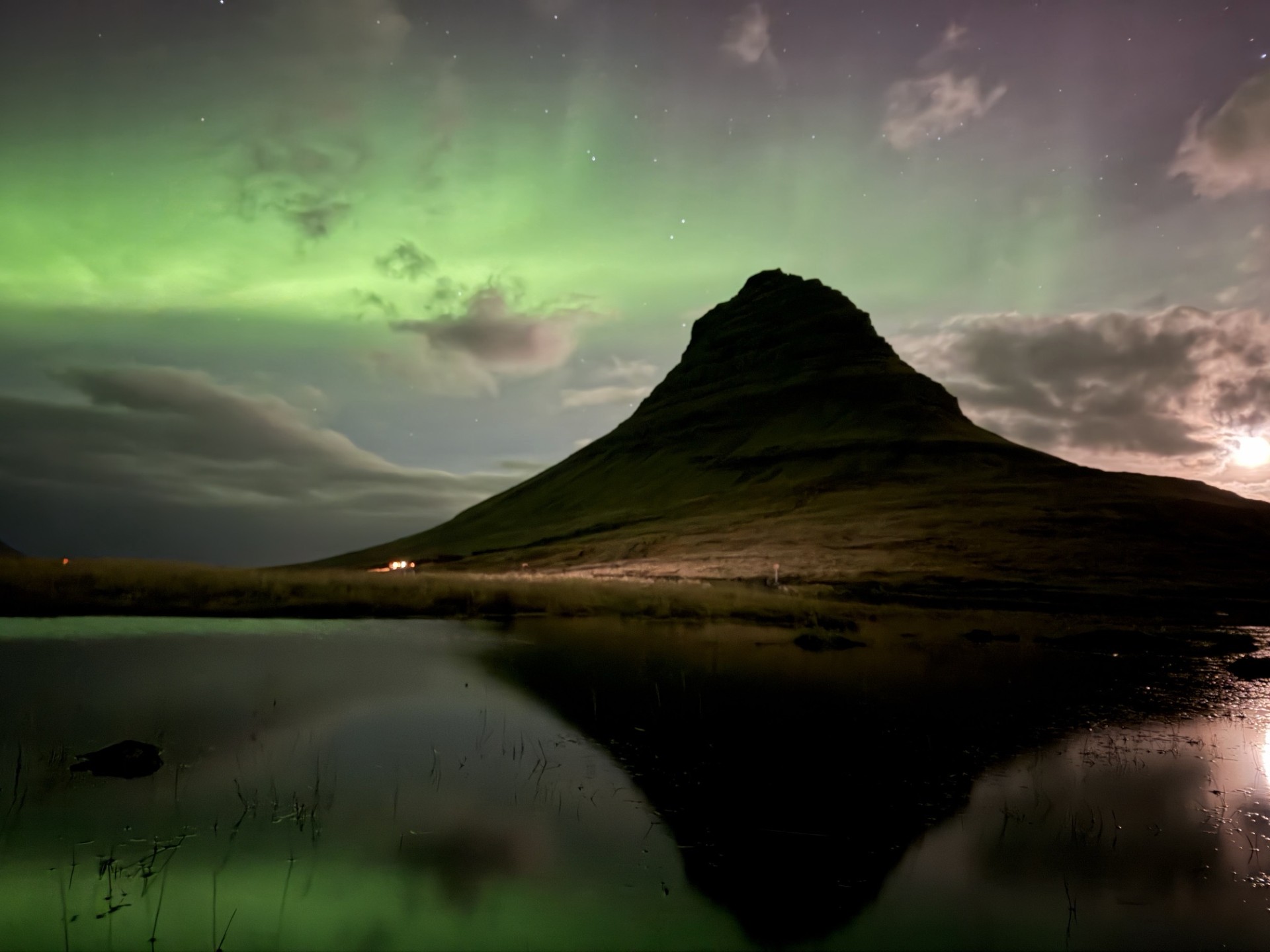
During my journey through western Iceland, I had the opportunity to witness Kirkjufell under two completely different moods. The first beneath the soft light of an overcast day, reflected perfectly in calm waters. The second under the Arctic night, illuminated by one of nature's greatest spectacles: the Northern Lights.
The Church Mountain
The name Kirkjufell translates to "Church Mountain", a reference to its shape, which resembles a steeple rising from the surrounding landscape. Located near the small fishing town of Grundarfjörður, the mountain reaches an elevation of 463 metres and dominates the coastline of the Snæfellsnes Peninsula.
Its isolated position enhances its visual impact. Unlike mountain ranges where peaks compete for attention, Kirkjufell stands almost alone, emerging from the landscape with remarkable symmetry. This unique profile has earned it a reputation as one of Iceland's most iconic natural landmarks.
Over the centuries, fishermen navigating the waters of western Iceland used the mountain as a reference point. Today, photographers travel from every corner of the globe hoping to capture its unmistakable silhouette beneath changing skies.
Land of Fire and Ice
To understand Kirkjufell, one must first understand Iceland.
The island sits directly on the Mid-Atlantic Ridge, a geological boundary where the North American and Eurasian tectonic plates slowly drift apart. This rare location makes Iceland one of the most volcanically active regions on Earth and has shaped its dramatic landscapes over millions of years.
Volcanic eruptions, tectonic activity and glaciation have worked together to create a terrain unlike anywhere else in Europe. Lava fields stretch across vast areas of the country, while glaciers carve valleys, fjords and mountains into extraordinary shapes.
Kirkjufell itself is the result of these powerful geological processes. During the Ice Age, moving glaciers sculpted the surrounding terrain, gradually carving the steep slopes and layered profile that define the mountain today. Its distinctive appearance is therefore not only beautiful but also a record of Iceland's geological history.
The Snæfellsnes Peninsula
Often called "Iceland in Miniature", the Snæfellsnes Peninsula contains many of the country's most characteristic landscapes within a relatively small region.
Visitors encounter volcanic craters, black-sand beaches, lava fields, dramatic cliffs and fishing villages scattered along the coastline. The peninsula is also home to Snæfellsjökull, a glacier-capped volcano that inspired Jules Verne's famous novel Journey to the Centre of the Earth.
Because of this extraordinary diversity, the region is often considered one of the best places to understand Iceland's geological and cultural identity.
Trolls, Legends and Hidden Worlds
Like many remarkable places in Iceland, Kirkjufell is surrounded by stories and folklore.
For centuries, Icelandic legends have spoken of trolls, hidden people and supernatural beings inhabiting mountains, lava fields and remote valleys. The country's dramatic landscapes inspired countless stories that helped explain the mysteries of nature long before modern science arrived.
A mountain as distinctive as Kirkjufell naturally became part of this tradition. Standing alone against the sky, it possesses a presence that feels almost mythical. While these tales belong to folklore rather than history, they remain deeply connected to Icelandic culture and continue to shape the way many people experience the landscape today.
Even now, the idea that something ancient and unseen exists beyond the visible world feels strangely believable among Iceland's vast volcanic wilderness.
Beneath the Northern Lights
If Kirkjufell is impressive during daylight, it becomes truly unforgettable after sunset.
During the long Arctic nights of autumn and winter, Iceland offers some of the best opportunities on Earth to witness the Aurora Borealis. These dancing curtains of light are created when charged particles from the Sun collide with gases in the Earth's upper atmosphere, producing waves of colour that move across the night sky.
On clear nights, the sky above Kirkjufell transforms into a theatre of light and motion. Green ribbons drift overhead while the mountain remains perfectly still below, creating a striking contrast between movement and silence.
Photographing the aurora requires patience. Conditions can change rapidly, clouds often appear without warning and the lights themselves may remain hidden for hours. Yet when everything aligns, the result feels almost surreal.
Standing beside the water as the aurora reflected across the surface, Kirkjufell seemed less like a mountain and more like a silhouette connecting sky and earth.
A Favourite of Photographers
Few places have become as closely associated with Icelandic photography as Kirkjufell.
Its perfect shape, accessible location and constantly changing weather create endless opportunities for different compositions. Photographers return throughout the year to capture the mountain in every season.
In summer, soft Arctic light illuminates green slopes beneath endless skies. During autumn, dramatic storms bring powerful contrasts and atmospheric conditions. Winter transforms the landscape into a world of snow, ice and auroras. Every visit reveals a different version of the same mountain.
This ability to constantly reinvent itself is one of the reasons Kirkjufell remains such an enduring subject.
The Mountain of Legends
What makes Kirkjufell truly remarkable is not its height or technical difficulty.
It is the way the mountain captures the very essence of Iceland.
Volcanoes beneath the ground. Glaciers that shaped the land. Legends carried through generations. Arctic weather that changes by the hour. And Northern Lights dancing overhead.
Together, these elements create a landscape that feels timeless.
By day, Kirkjufell stands as one of Iceland's most iconic natural landmarks. By night, beneath the glow of the aurora, it becomes something even more extraordinary.
For travellers it is a destination. For photographers it is a dream. And for anyone fortunate enough to witness it beneath the Arctic sky, it becomes a memory impossible to forget.
Photo Notes
Location: Kirkjufell, Snæfellsnes Peninsula, Iceland
Elevation: 463 m
Nearest Town: Grundarfjörður
Category: Landscape Photography
Subject: Kirkjufell and the Northern Lights
Photographer: Carles Torres