Silent Giants
JÖKULSÁRLÓN · ICELAND
In southeastern Iceland lies a landscape unlike any other on Earth. Here, gigantic icebergs drift silently across a glacial lagoon while seals swim between them, disappearing beneath waters that hover just above freezing.
Jökulsárlón is a place where seemingly opposite forces coexist. Ancient ice survives only a few kilometres from one of the most volcanically active regions on the planet, creating an environment shaped equally by fire and ice.
For photographers, it is a dream. For nature lovers, it is a reminder of the extraordinary beauty and complexity of our planet. Every iceberg tells a story centuries in the making, while every seal represents life thriving in one of Earth's most extreme environments.
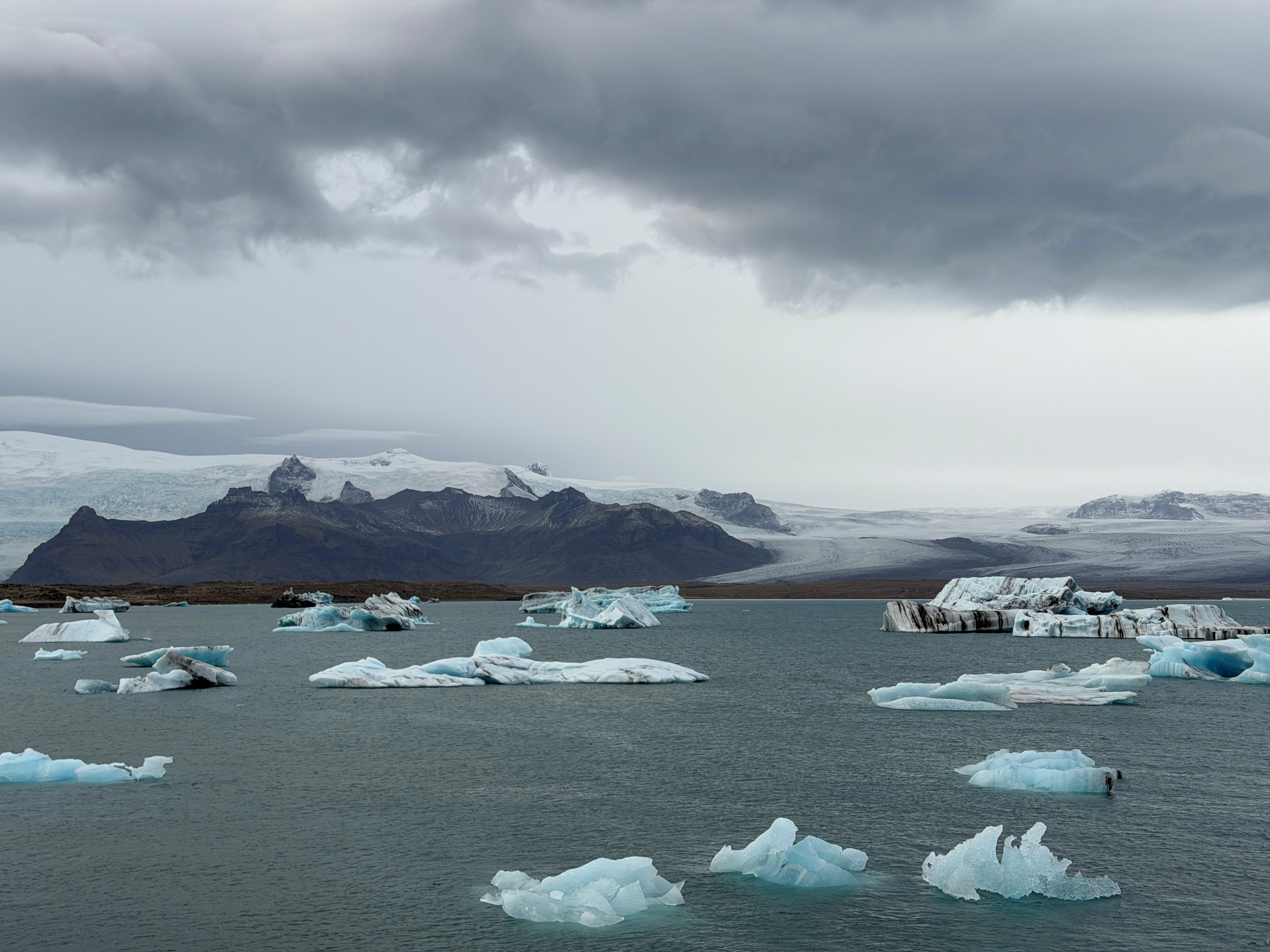
Jökulsárlón is fed by Breiðamerkurjökull, an outlet glacier connected to Vatnajökull, Europe's largest ice cap. The ice visible in the lagoon today may have started its journey hundreds of years ago as snow falling on Iceland's highlands.
Over time, layer upon layer of snow became compressed into dense glacial ice. Under its own immense weight, air bubbles were squeezed out, creating the deep blue tones that make many Icelandic icebergs so striking.
Every iceberg floating on the lagoon once formed part of the glacier itself. Their slow journey towards the ocean represents the final chapter of a lifecycle that may have begun centuries ago.
Some of the ice drifting through Jökulsárlón today may be older than entire countries. Snow that fell hundreds of years ago eventually became the icebergs now floating peacefully through the lagoon.
The Paradox of Fire and Ice
Few places on Earth showcase such dramatic contrasts as Iceland. Beneath many of the country's glaciers lies intense geothermal and volcanic activity.
Iceland sits astride the Mid-Atlantic Ridge, where tectonic plates slowly drift apart. Magma rises from deep within the Earth, creating volcanoes, lava fields and geothermal landscapes.
Yet despite this constant geological activity, vast glaciers continue to dominate large parts of the country. The result is a landscape where fire and ice coexist in a fragile balance found almost nowhere else on the planet.
Some Icelandic volcanoes even lie hidden beneath glaciers. During eruptions, volcanic heat can melt enormous quantities of ice within hours, generating catastrophic floods known as jökulhlaups.
This unique combination of active volcanoes and enormous glaciers gave Iceland its famous nickname: The Land of Fire and Ice.
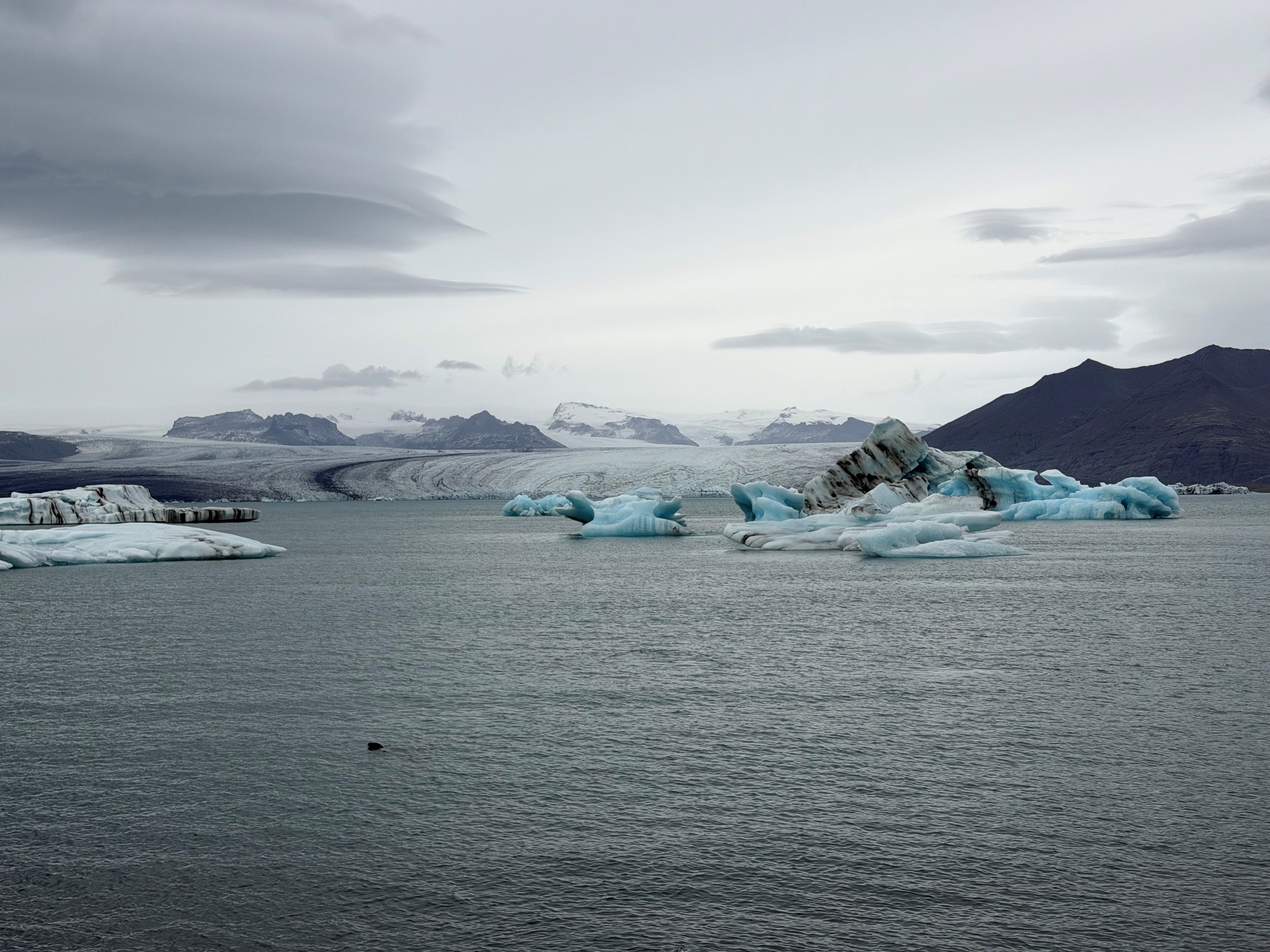
The scale of Jökulsárlón is difficult to capture in a single photograph. Watching the silent movement of ice across the lagoon offers a far more immersive perspective.
Life Among the Ice
Although the lagoon appears harsh and inhospitable, it supports an abundance of life. Fish thrive in the cold waters, attracting seabirds and one of Iceland's most beloved marine mammals: the seal.
Harbour seals and grey seals are frequently seen swimming among the icebergs, surfacing briefly before disappearing once again beneath the water.
Their presence transforms the lagoon from a dramatic landscape into a living ecosystem.
Water temperatures often remain close to freezing throughout the year. For humans, prolonged exposure would quickly lead to hypothermia. For seals, however, these icy conditions represent the perfect environment.
The Hidden Life of Icelandic Seals
Seals are exceptionally adapted to life in Arctic and sub-Arctic waters. Beneath their skin lies a thick layer of blubber that provides insulation from temperatures close to freezing.
Few people realise that a seal's whiskers are among the most sensitive organs in the animal kingdom. These specialised hairs can detect tiny disturbances in the water, allowing seals to follow fish even when visibility is poor.
Their eyes are specially adapted for underwater vision, helping them hunt efficiently beneath the surface.
When diving, seals can slow their heart rate dramatically, conserving oxygen and remaining underwater far longer than humans could ever hope to.
Even more remarkable, seals can close their nostrils completely while diving and reopen them automatically when they surface to breathe.
Some seals sleep while floating in the ocean. Others nap beneath the surface, rising automatically to breathe before sinking back into sleep.
A seal's body contains so much insulating fat that the freezing waters of Jökulsárlón present little challenge. In fact, they are far better adapted to these conditions than most predators.
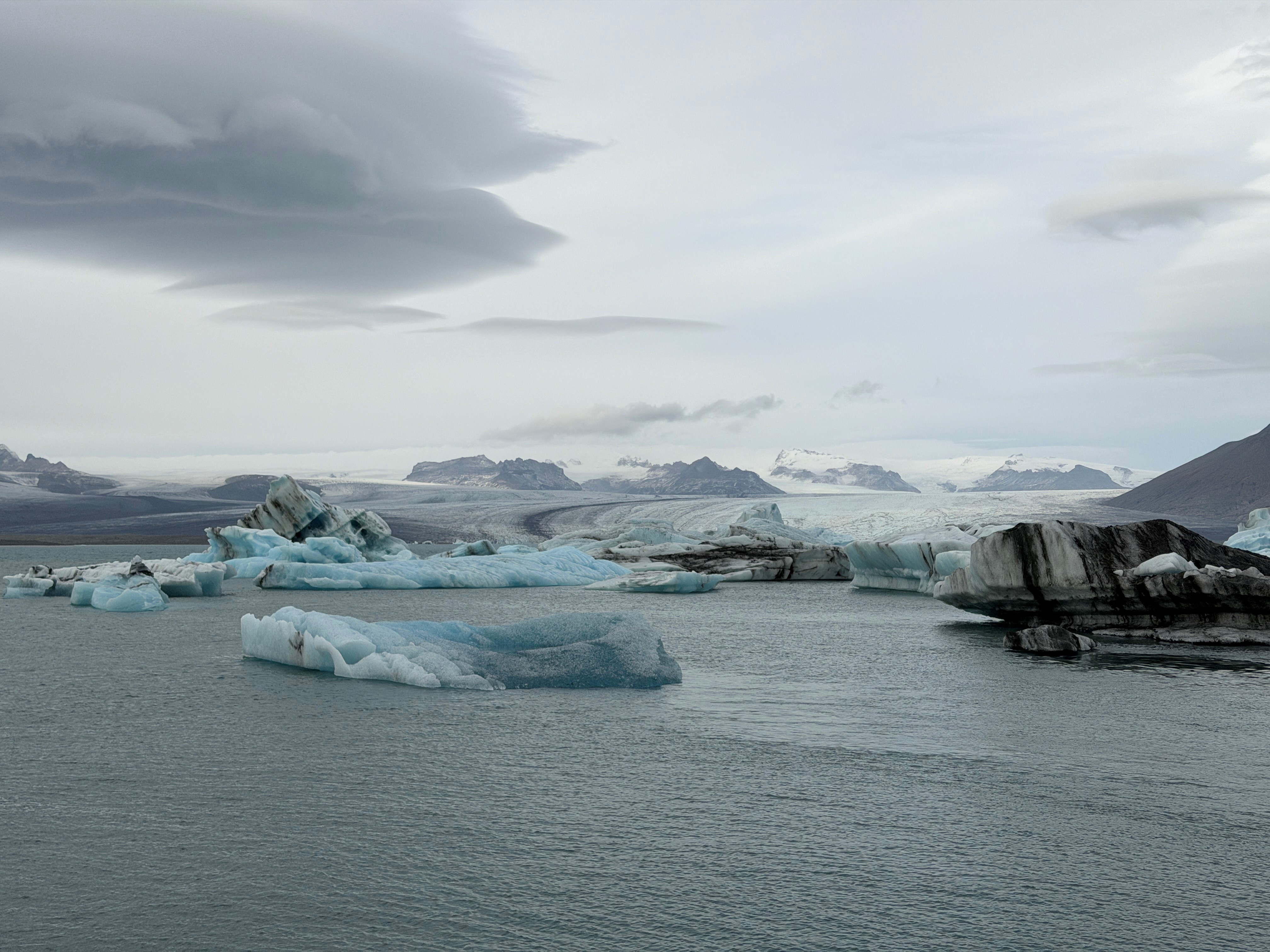
One of the highlights of visiting Jökulsárlón is observing seals in their natural habitat. Perfectly adapted to the cold waters of the North Atlantic, they move effortlessly through an environment that appears almost hostile to human life.
A Landscape in Constant Motion
Unlike mountains or forests, Jökulsárlón is never truly still. Icebergs continuously drift, rotate and melt as they travel through the lagoon.
Some survive only weeks. Others remain for years before eventually reaching the Atlantic Ocean.
Many continue their journey towards Iceland's famous Diamond Beach, where fragments of glacial ice wash ashore upon black volcanic sand, creating one of the country's most iconic landscapes.
The lagoon itself continues to grow as the glacier retreats, a visible reminder that even the most ancient landscapes remain constantly in motion.
The icebergs are constantly changing shape. A formation photographed in the morning may look completely different by sunset after rotating, cracking or partially melting.
Many of the deepest blue icebergs contain almost no trapped air. Their colour is created by centuries of compression that allow the ice to absorb and scatter light in unique ways.
Silent Giants
Standing beside Jökulsárlón, it becomes impossible not to feel humbled by the scale of the landscape.
The icebergs move silently across the lagoon. Seals surface among them before disappearing once again beneath the water. Behind everything, the glacier slowly advances and retreats in an endless cycle shaped by time.
What makes this place extraordinary is not simply the ice, the wildlife or the scenery. It is the intersection of all three.
Few places on Earth combine such powerful natural forces in a single setting. Ancient glaciers, volcanic landscapes and thriving marine life coexist in remarkable harmony.
Jökulsárlón reminds us that nature's greatest wonders are often its quietest. The giants here do not roar. They simply drift across the water, carrying centuries of history within them.
Photo Notes
Location: Jökulsárlón Glacier Lagoon, Iceland
Region: Vatnajökull National Park
Glacier: Breiðamerkurjökull
Wildlife: Harbour Seals and Grey Seals
Category: Landscape & Wildlife Photography
Subject: Glaciers, Icebergs and Marine Life
Photographer: Carles Torres