The Great African Mosaic
TANZANIA · ZANZIBAR · AFRICA · WILDLIFE
Africa often enters our imagination through individual animals. A lion beneath an acacia, an elephant crossing the grass, a giraffe rising above the trees or a herd of zebras disappearing towards a distant horizon.
But the longer you spend in the wild landscapes of Tanzania, the harder it becomes to see any of them in isolation. The grass beneath a zebra's feet, the branches browsed by a giraffe, the water occupied by hippos and the paths opened by elephants are all parts of the same enormous system.
Rain changes the vegetation. Vegetation determines where herbivores can feed. Water draws animals together or allows them to disperse. Predators respond to their movements, scavengers respond to predators, insects recycle what remains and every generation inherits a landscape already altered by the generations that came before it.
Every animal changes something, and every animal depends on something else.
Then, beyond the plains of mainland Tanzania, the landscape changes almost completely. Across the water in Zanzibar, open grass gives way to tropical vegetation, the horizon becomes ocean and the enormous mammals of the savannah are replaced by primates, amphibians and organisms living at an entirely different scale.
Yet the fundamental rules remain remarkably similar. Water, climate, food, competition, cooperation and adaptation continue to determine where life can exist and how it survives.
This journey was not simply a succession of wildlife encounters. It was a glimpse into an immense living mosaic.
A World Inside a Volcano
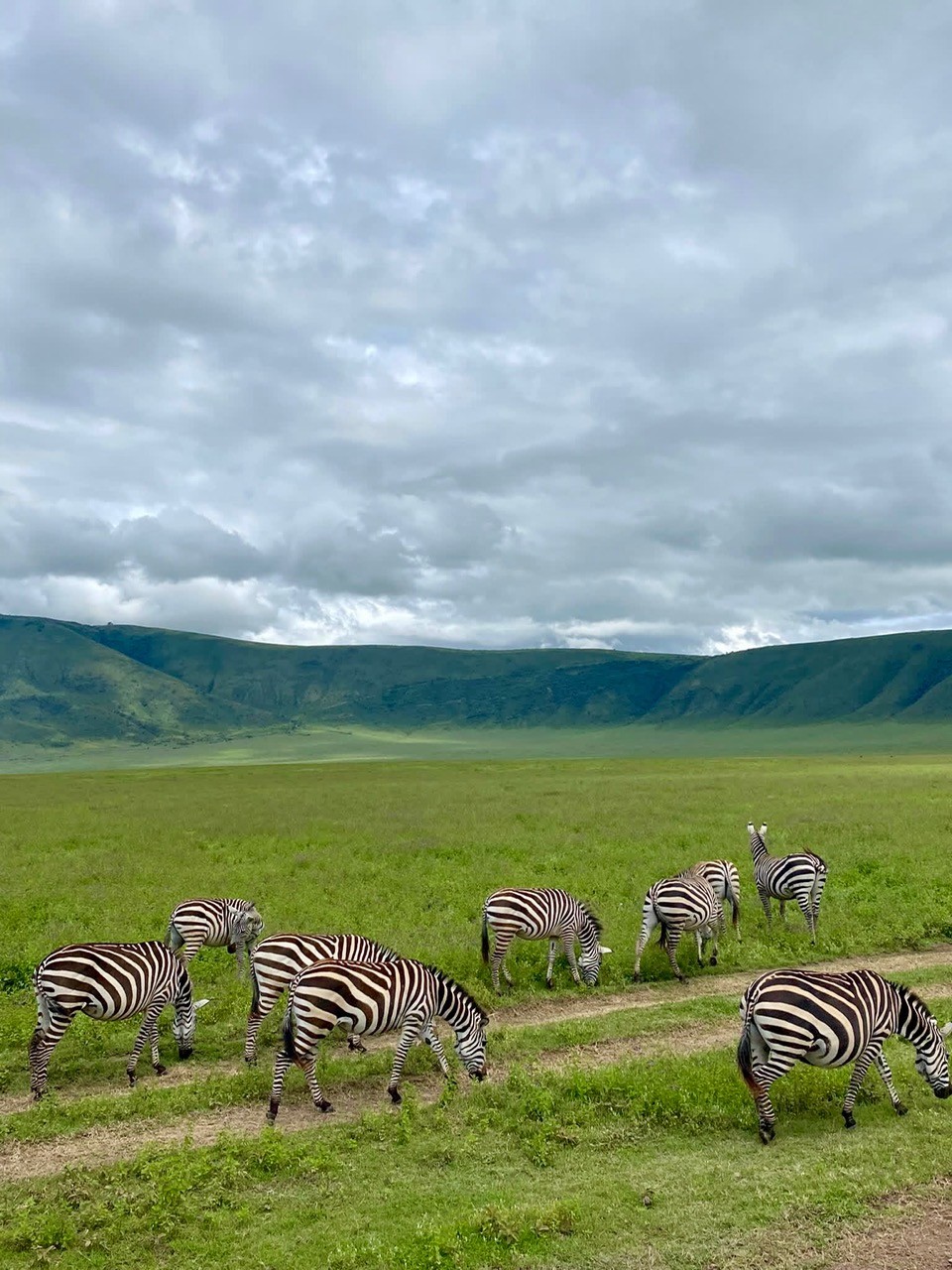
Few landscapes reveal the scale of Tanzania as dramatically as Ngorongoro. From the floor of the caldera, the distant walls rise around an enormous open landscape, enclosing grasslands, woodland, wetlands, streams and lakes within the remains of an ancient volcanic system.
The landscape began with destruction. Millions of years ago, a much larger volcano occupied this part of northern Tanzania. After major volcanic activity, its summit collapsed inward, leaving behind the vast depression we see today. The resulting caldera stretches roughly twenty kilometres across, while its rim rises hundreds of metres above the floor.
What was once a geological catastrophe eventually became the foundation for an extraordinarily productive ecosystem. Differences in water, vegetation and terrain created multiple habitats within the same natural basin, allowing very different animals to occupy the landscape at the same time.
The zebras in front of us appeared to be wandering freely through an almost limitless field. But their movements were being shaped by forces invisible in the photograph. Somewhere behind every grazing animal lies a chain beginning with geology, soil, sunlight and rain.
Rain determines where and when plants grow. The quantity and quality of that vegetation influence herbivores, and the distribution of herbivores creates opportunities for predators. What looks like an empty green plain is therefore the visible surface of a much more complicated biological system.
The landscape is not simply the background to the wildlife.
It is one of the reasons the wildlife can exist.
The Mystery Written in Stripes
Among all the adaptations visible on the African plains, few are as immediately recognisable as the black-and-white pattern of a zebra. The obvious question — why does a zebra have stripes? — sounds simple enough. Scientists have been trying to answer it for generations.
Many explanations have been proposed, including camouflage, recognition between individuals, temperature regulation and the possibility that moving stripes make it harder for predators to isolate an individual inside a herd. Some of these ideas may still contribute to the wider story, but one of the strongest experimental lines of evidence involves an adversary far smaller than a lion.
Biting flies.
Research has shown that striped surfaces can interfere with the ability of certain blood-feeding flies to land successfully. That matters because these insects are not merely irritating. Repeated bites cost blood and energy, while some flies can also transmit disease.
One of the most spectacular patterns in the mammalian world may therefore have been shaped, at least partly, by evolutionary pressure from insects small enough to disappear against the animal carrying the stripes.
There is another detail hidden inside the herd: no two zebras have exactly the same stripe pattern. To human eyes, a distant group can appear almost uniform, but each animal carries its own arrangement of lines.
The photograph becomes more interesting once you know this. What first appears to be repetition is actually individuality repeated across an entire herd.
“The smallest pressures can shape the most spectacular designs.”
Engineering the Tallest Animal on Earth
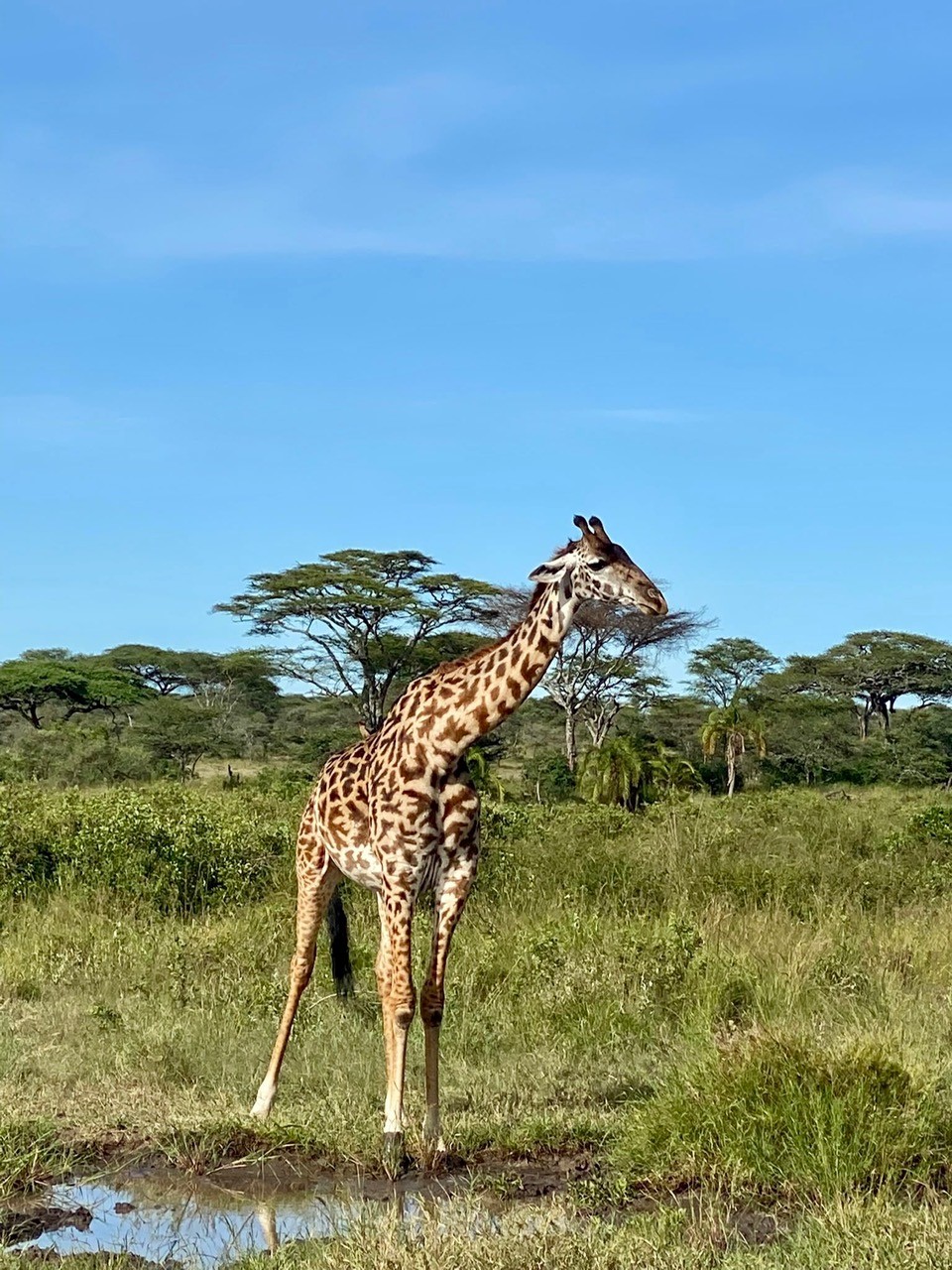
A giraffe looks almost improbable. Its legs lift the body far above the ground, the neck continues upwards for metres and the head reaches vegetation unavailable to most other large herbivores. But becoming the tallest living animal created a problem that is easy to overlook when admiring the silhouette.
Blood still has to reach the brain.
A giraffe therefore lives with an extraordinary cardiovascular challenge. Its heart is exceptionally powerful and must generate high blood pressure to move blood upwards against gravity. Yet the same animal also has to lower its head towards the ground to drink without allowing those pressure changes to become dangerous.
Its circulatory system contains adaptations that help manage these dramatic differences in height and pressure. The giraffe's strange appearance is therefore not simply a matter of stretching a conventional mammal upwards. Its physiology has had to evolve alongside its proportions.
Perhaps the most surprising clue lies inside the neck itself. Despite its extraordinary length, a giraffe has seven cervical vertebrae — the same number found in humans and most other mammals. Evolution did not solve the problem by adding a long chain of additional neck bones. It greatly elongated the existing basic mammalian arrangement.
The adaptations continue at the other end. A long, highly mobile tongue helps manipulate vegetation among branches and thorns, while the structures on top of the head that resemble horns are not true horns at all. They are ossicones: structures that begin as cartilage and later ossify and fuse with the skull as the animal matures.
What appears from a distance to be a remarkably simple design — very long legs and a very long neck — is actually a collection of anatomical solutions working together.
Looking Over the Savannah
Height changes more than feeding. A giraffe's elevated viewpoint allows it to observe the surrounding landscape from a position unavailable to animals closer to the ground.
That creates information, and information in the wild can be as important as food.
Other animals do not need to understand a giraffe in the way humans understand language to benefit from its behaviour. A sudden change in posture, direction or attention from an animal looking across the vegetation can reveal that something in the environment has changed.
This kind of indirect information is everywhere in an ecosystem. One species hears an alarm call. Another notices animals suddenly running. A bird takes flight. Heads rise above the grass. Within seconds, information about a potential danger can move through animals that do not belong to the same species.
The savannah is not only a landscape of bodies.
It is a landscape of signals.
Strength in Numbers
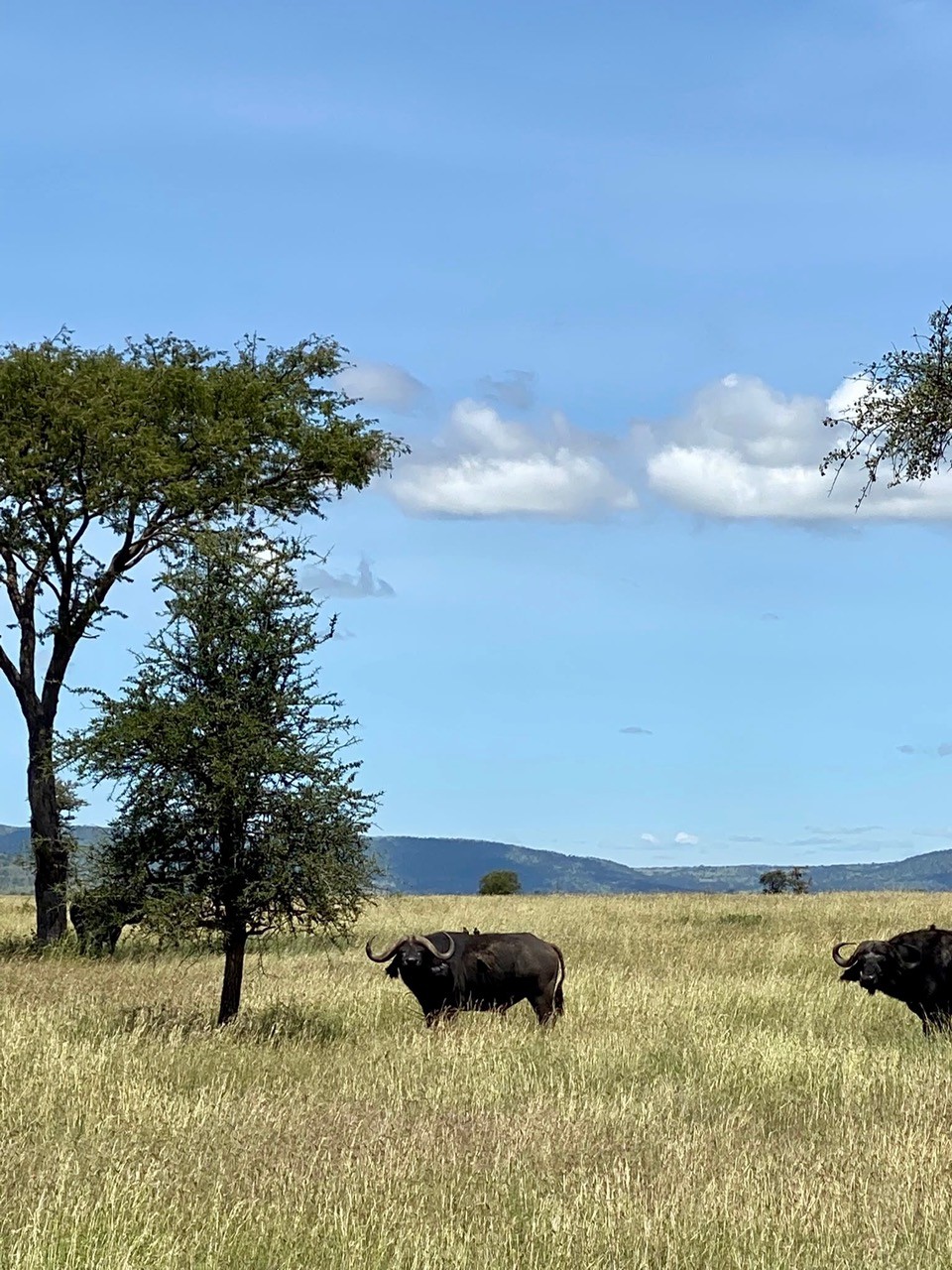
African buffalo can appear deceptively calm. A dark body standing quietly among yellow grass gives little indication of how different the situation becomes when many buffalo act together.
They are highly social herd animals, and the group itself can become one of their most important forms of defence. Calves and more vulnerable individuals gain protection from the bodies and vigilance of surrounding animals, while adults may respond to a threat by standing their ground rather than simply scattering.
For a predator, that changes the calculation completely. A buffalo combines considerable body mass with powerful horns, and an attack that goes wrong can seriously injure a lion. When several animals respond together, the distinction between hunter and hunted can become surprisingly unstable.
The herd is therefore more than a collection of individuals travelling in the same direction. It is a defensive system in which the behaviour of one animal changes the risks faced by the others.
There is another interesting consequence of group living. Coordinated movement does not always require one permanent leader giving instructions. Decisions can emerge through the behaviour of multiple animals responding to grazing, water, neighbours and danger. Small changes in direction can spread through a herd until what looks from a distance like a single coordinated movement has emerged from many individual decisions.
Once again, survival depends on information moving through a group.
The Memory of a Family
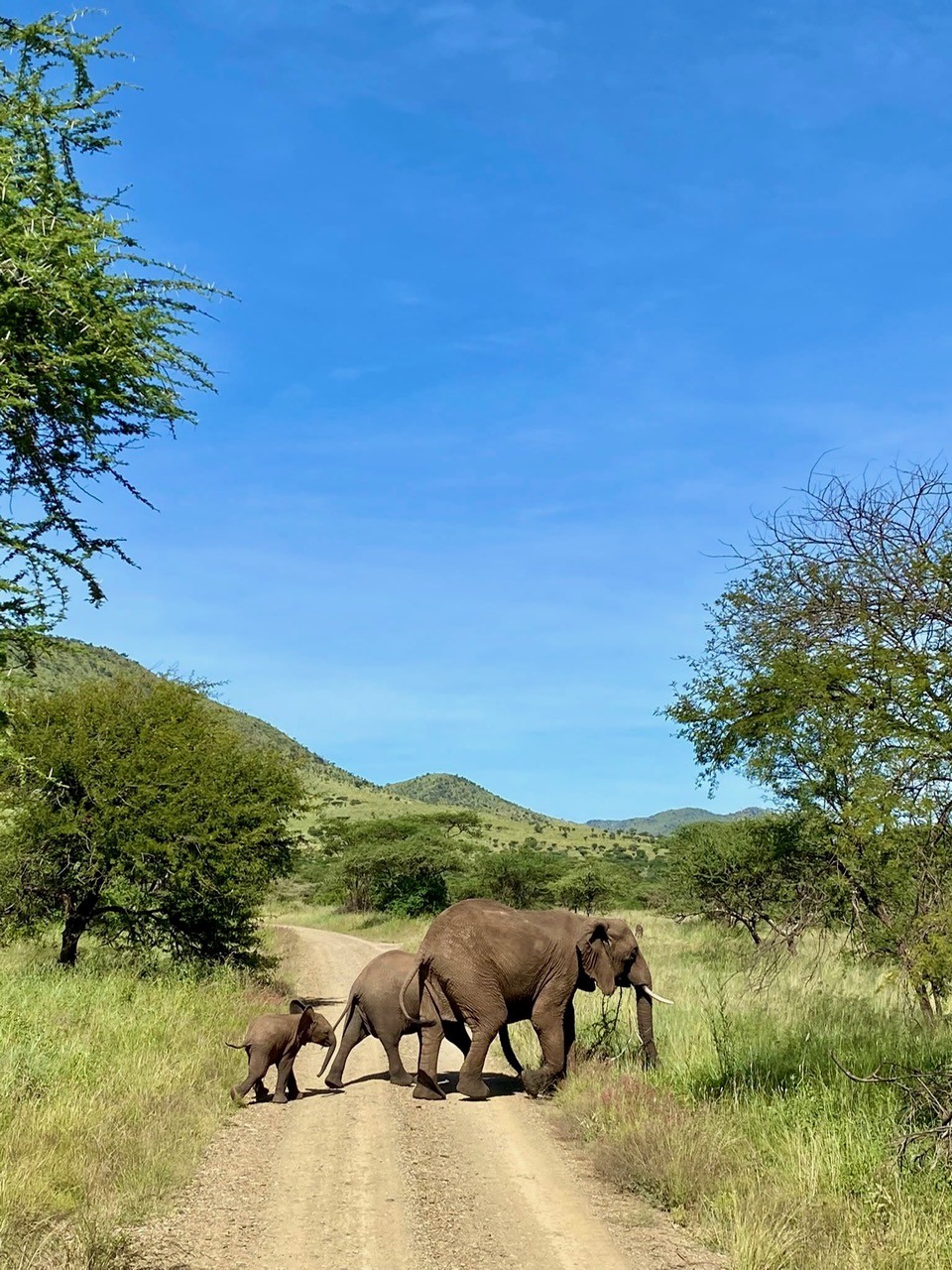
Then the road stopped belonging to us.
An elephant stepped across it, followed by younger animals and a small calf whose proportions seemed almost impossible beside the enormous body of the adult. For a few moments, the safari track became what it had always been from their perspective: simply another line through elephant country.
The crossing lasted only seconds. The knowledge required to make journeys like it can take decades to accumulate.
African elephant families are built around long-lasting relationships between females and their offspring. Experienced older females can play a particularly important role, and age can represent something more valuable than physical strength: memory.
Where can water still be found when familiar pools disappear? Which routes have been used before? How should the family react to unfamiliar elephants? Which sounds represent danger, and which belong to individuals known for years?
An elephant born into such a family does not simply inherit genes. It grows inside a social archive.
Young elephants spend years learning from the animals around them. Other females may assist mothers and interact with calves, a behaviour commonly described as allomothering. A calf therefore develops inside a network of social relationships in which experience can pass from older animals to younger ones.
That makes the loss of an experienced elephant more significant than the disappearance of a single body. Knowledge accumulated over decades can disappear with it.
Conversations Beyond Our Hearing
Elephant society also extends far beyond what we can see in a photograph. Their vocal repertoire includes very low-frequency rumbles, some containing frequencies below the normal range of human hearing.
Low-frequency sound is particularly useful across large landscapes because it can travel considerable distances. Elephants can use vocal information to maintain contact and coordinate with individuals that may be far beyond our immediate view.
Sound is only one channel. Touch, smell, posture and movement all carry information. A trunk placed against another elephant, the position of the head, a scent carried through the air or a vibration too low for us to notice can all belong to a social world much richer than the apparent silence of the scene suggests.
To us, the family crossing the track seemed quiet.
To them, it may have been anything but.
“An elephant family carries more than its young. It carries memory.”
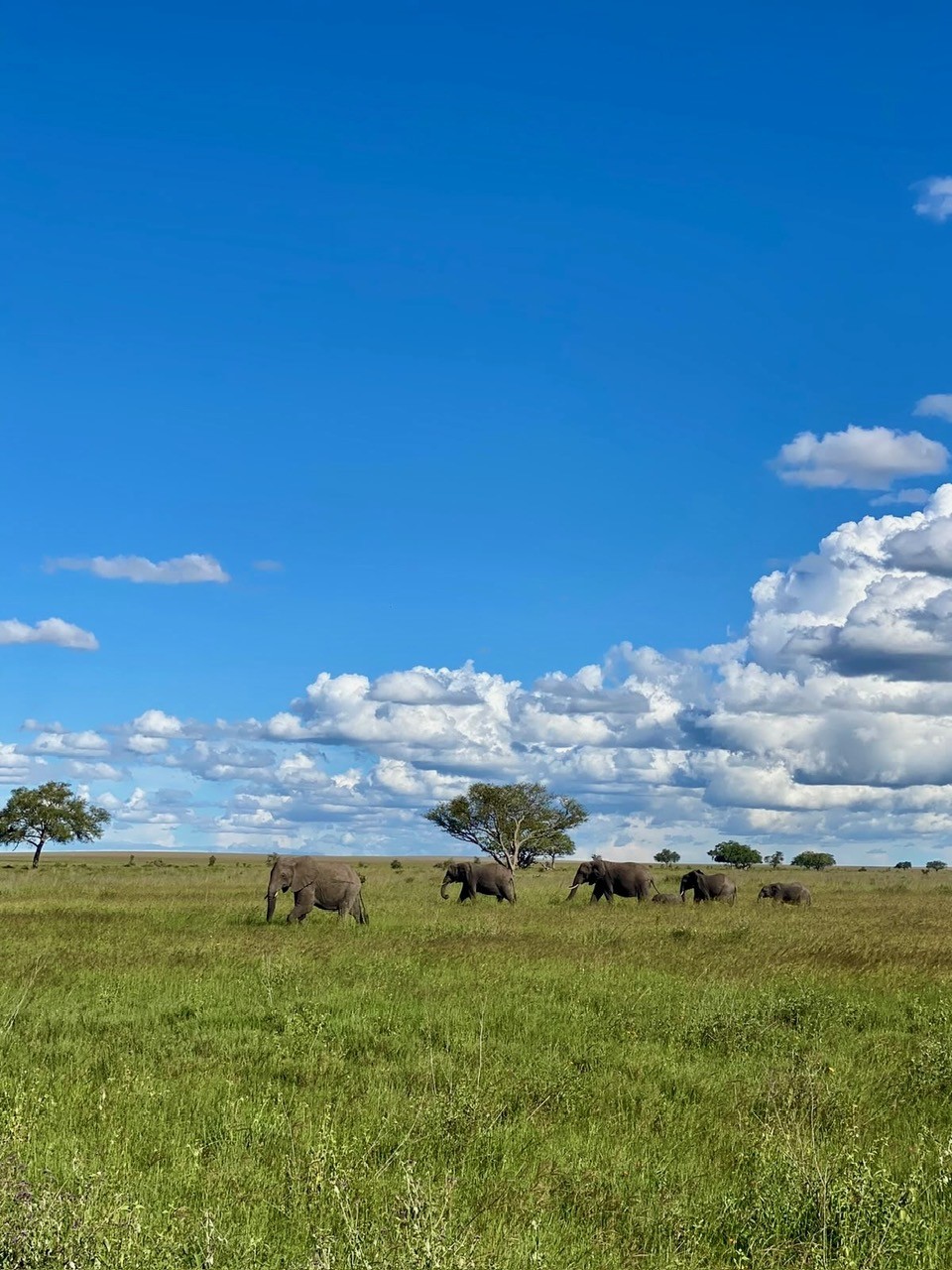
The Architects of the Savannah
Seeing elephants spread across an open landscape reveals another part of their importance. Elephants do not merely inhabit ecosystems. They physically modify them.
They break branches, strip bark, push over vegetation, open paths and transport seeds. Their feeding can alter the balance between wooded and open habitats, while repeated use of waterholes can change the physical structure of those places.
Ecologists sometimes describe animals that modify habitats in ways that influence many other organisms as ecosystem engineers. Few large mammals make the idea as visible as an elephant.
A branch brought down by an elephant can become accessible to a smaller herbivore. An opened patch of vegetation changes the amount of light reaching the ground. Dung returns nutrients to the ecosystem and can carry seeds away from the plants that produced them. A trail opened through vegetation may later be followed by animals far smaller than the elephant that created it.
This means the ecological footprint of an elephant extends well beyond the enormous prints left in the soil. Even after the animal has disappeared from view, evidence of its presence can remain in the structure of the landscape.
The savannah is not a fixed stage on which animals perform.
The animals help build the stage.
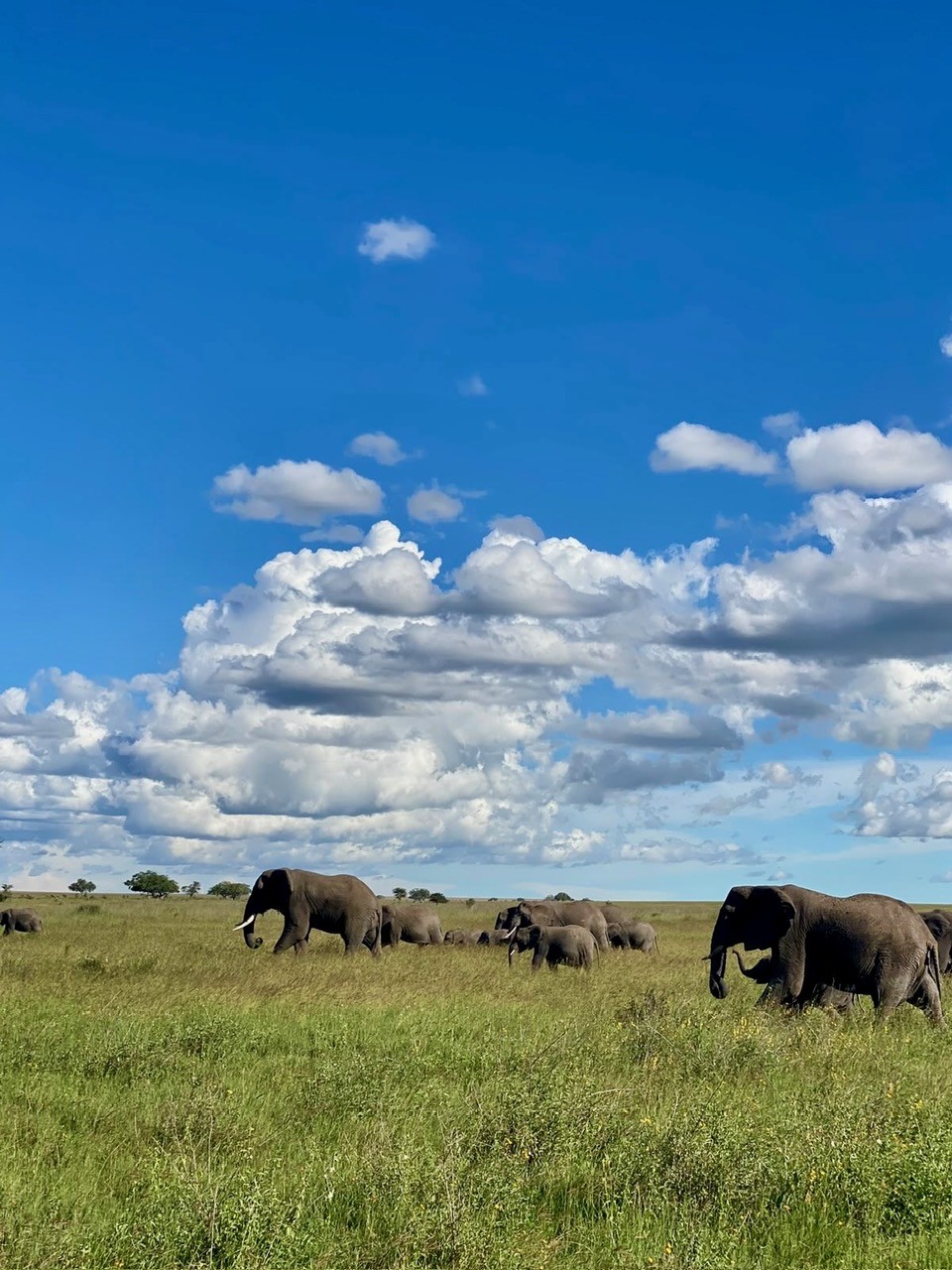
Why Giants Need Space
The enormous sky above the herd tells another part of the story. Large animals need more than isolated pockets of suitable habitat. They need access to landscapes through which they can move.
Elephants may travel substantial distances in response to food, water, seasonal change and social needs. The habitat required by a herd is therefore not simply the place where the animals happen to be standing at a particular moment. It includes the routes connecting feeding areas, water and other important parts of their lives.
This is why ecological corridors matter. A protected area can preserve exceptional habitat, but the boundary humans draw around it does not necessarily correspond to the way an elephant experiences the world.
For the animal, the meaningful map is created by rainfall, vegetation, water, memory and movement. A route used during one season may be less useful in another. A distant water source may become critical when conditions change.
The herd in the photograph occupies only a small part of the frame. Its real landscape may extend far beyond it.
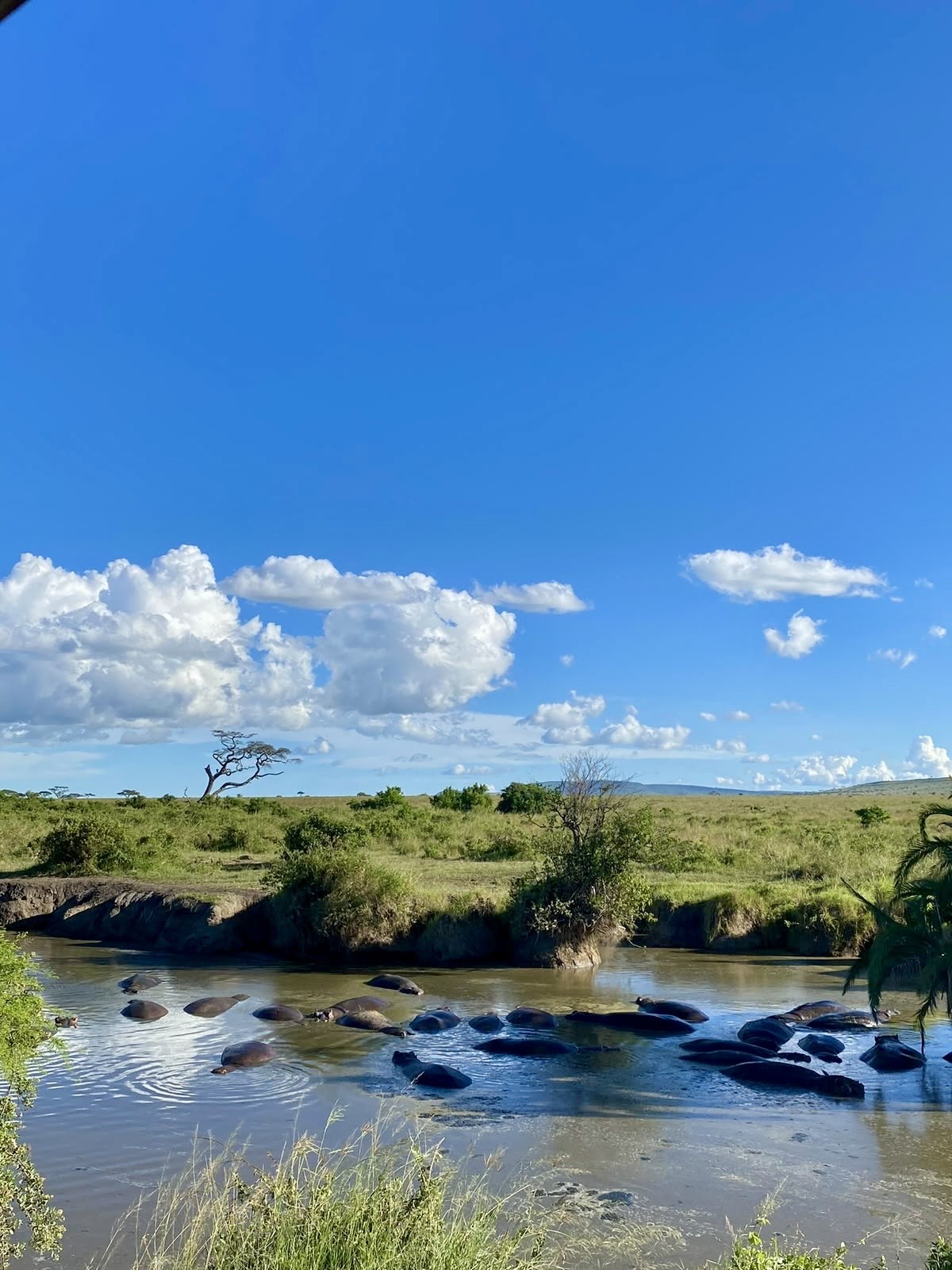
Between Two Worlds
Hippos seem to belong completely to water. Their eyes, ears and nostrils sit high on the head, allowing much of the body to remain submerged while the animal continues to monitor what happens above the surface.
Yet a hippopotamus lives between two environments.
Water provides refuge from heat and helps protect its skin from drying during the day. After darkness falls, hippos can leave rivers, lakes and pools to graze on land before eventually returning to the water.
That daily journey creates an ecological connection between terrestrial and aquatic environments. Material consumed on land does not necessarily remain there. When hippos return to the water, nutrients can move with them into the aquatic system.
The animals resting almost motionless in a pool are therefore connected to grasslands that may lie well beyond the edge of the photograph. Their bodies become vehicles through which matter moves from one part of the ecosystem to another.
A river and a grassland may look like separate habitats.
A hippo makes the boundary less clear.
The Animal with Its Own Skin Chemistry
There is an even stranger adaptation hidden on the surface of a hippo's body. Despite the familiar expression, hippos do not literally “sweat blood”.
Their skin produces a secretion that initially appears colourless and later develops reddish or orange tones. The colour comes from pigments including compounds known as hipposudoric and norhipposudoric acids.
Research has found that these compounds can help protect the skin from ultraviolet radiation and also possess antimicrobial properties. For an animal spending its life between intense tropical sunlight and aquatic environments, that chemistry provides a remarkable form of protection.
It sounds almost fictional: a giant semi-aquatic mammal producing its own reddish protective skin secretion. But biology repeatedly produces solutions stranger than the stories we invent about it.
A Family Tree Leading to the Ocean
Appearance can also mislead us about evolutionary relationships. With their barrel-shaped bodies, short legs and enormous mouths, hippos were historically associated in the imagination with pig-like mammals.
Their evolutionary family tree points somewhere much more surprising.
The closest living relatives of hippos are cetaceans — the group containing whales and dolphins. Their modern bodies could hardly look more different, yet they belong to evolutionary branches connected by a shared ancestry deep in the past.
That relationship is a useful reminder that evolution is not organised according to superficial resemblance. Millions of years can transform related lineages into animals adapted to radically different ways of life.
And in a journey that would eventually take us from the African interior to the Indian Ocean, the connection felt strangely appropriate. Even beside an inland pool, part of the hippo's evolutionary story points towards the sea.
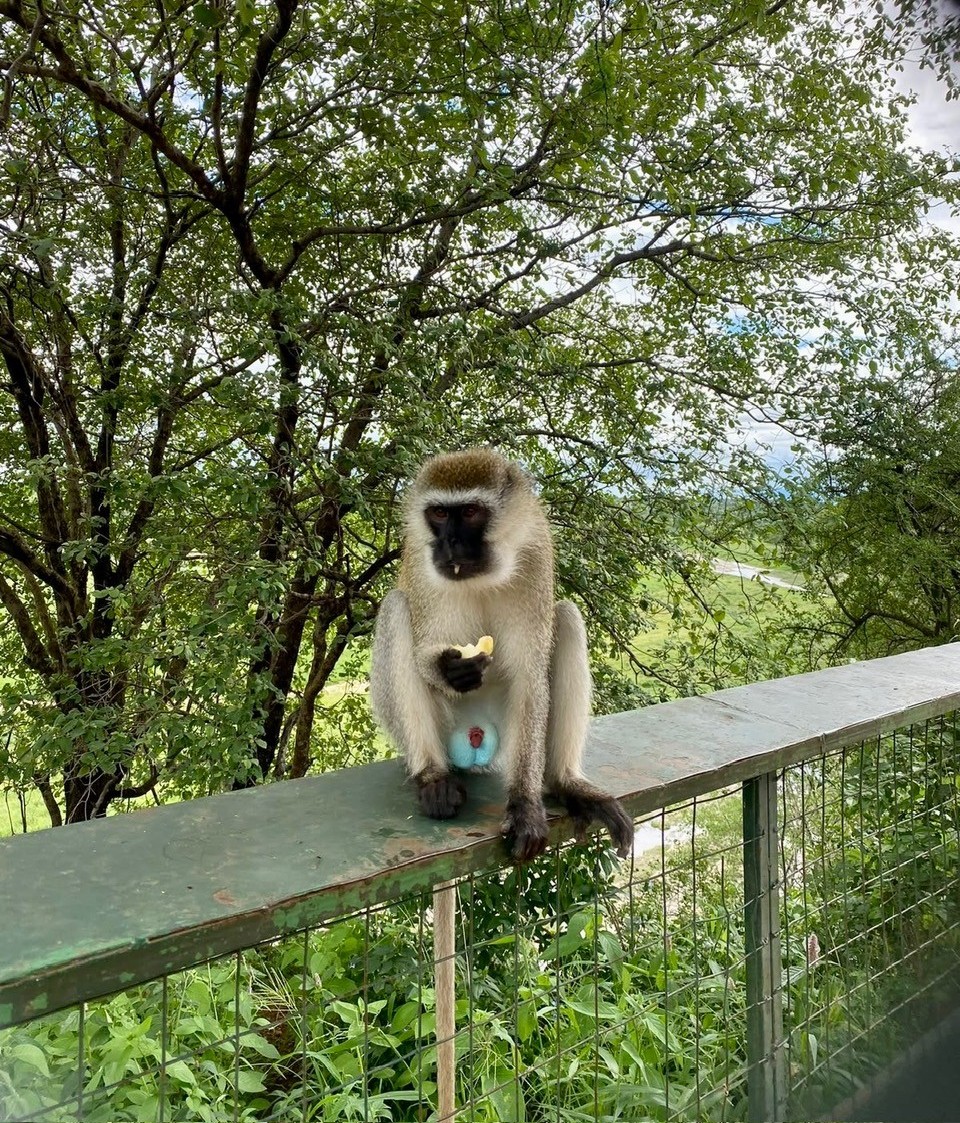
Intelligence at the Edge of the Forest
Not every remarkable adaptation belongs to a giant. After elephants, giraffes, buffalo and hippos, the vervet monkey seemed to belong to a smaller world. But smaller does not mean simpler.
Vervets live in social groups and navigate a dense network of relationships, gestures and vocal signals. They have become especially well known in studies of animal behaviour because their alarm calls can carry information associated with different kinds of danger.
That distinction matters. A threat approaching across the ground does not create the same problem as a predator arriving from above. The useful response depends on where the danger is coming from.
For an animal moving between trees and open ground, survival therefore requires more than noticing that something is wrong. It requires interpreting information quickly enough to choose an appropriate response.
Adult male vervets also carry one of the most visually surprising details among East African primates: striking blue or blue-green skin around the scrotum. Against the surrounding fur, the colour can look almost artificial.
It is entirely natural.
The monkey becomes another reminder that the African landscape is full of adaptations operating at very different scales. Some are measured in tonnes and reshape vegetation. Others exist in colour, communication and decisions made in a fraction of a second.
The Landscape Is the Story
After enough encounters, something begins to change in the way you look at the savannah.
At first you search for animals. Eventually you begin to search for relationships.
The zebra is no longer simply a zebra. It is a grazer responding to vegetation produced by rain and soil, carrying a striped pattern shaped by evolutionary pressures that may include insects almost invisible beside it.
The giraffe occupies vegetation metres above that grazing level. The buffalo turns numbers into defence. The elephant changes the physical structure of the habitat. The hippo carries nutrients between land and water. The vervet lives inside a network of social information.
Predators respond to the movements of herbivores. Scavengers respond to predators. Insects and microorganisms break down what remains. Plants respond to grazing, rainfall and disturbance, and the animals respond again to the plants.
There is no point at which the animal ends and the ecosystem begins.
The relationships are the ecosystem.
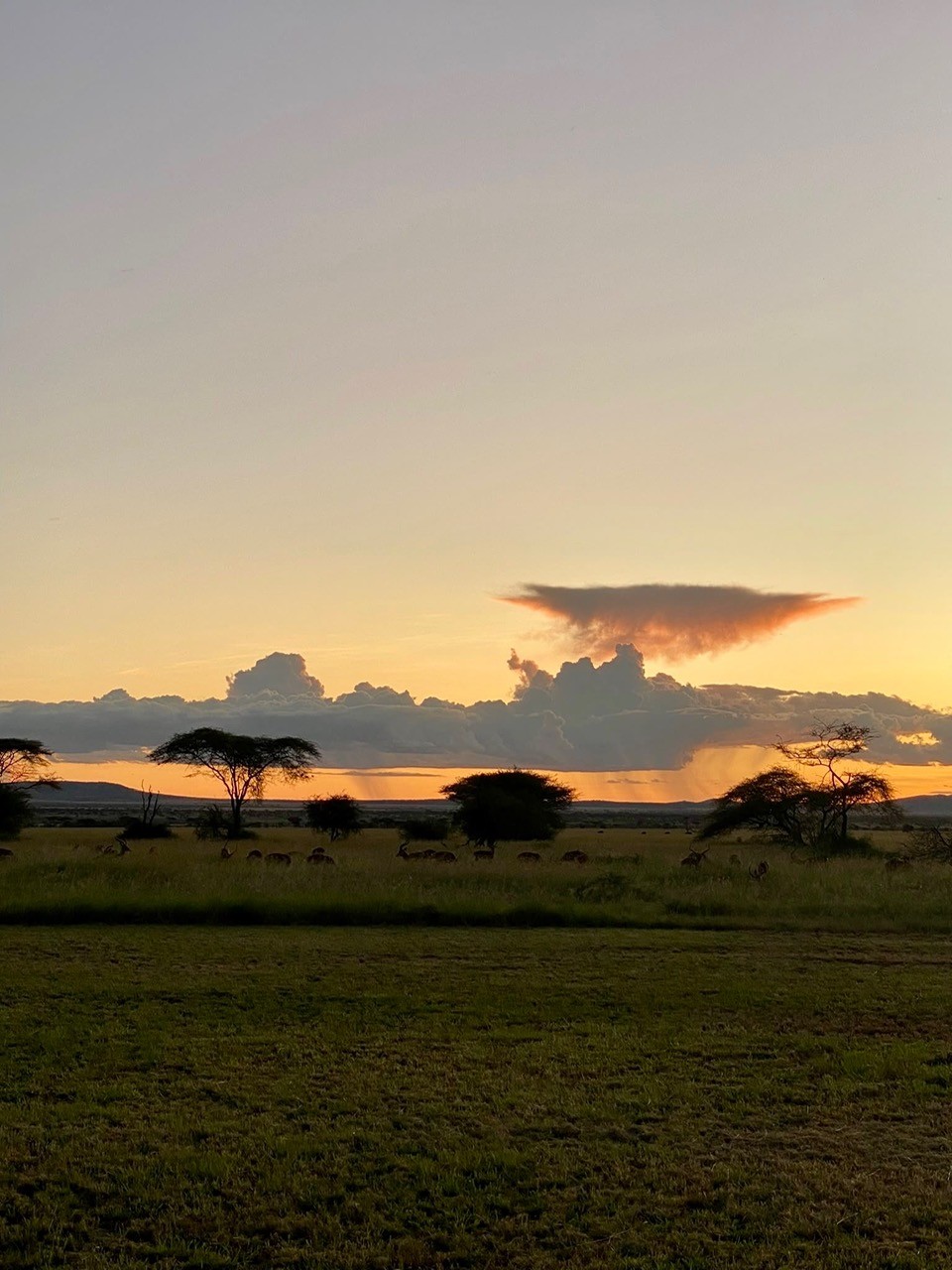
When the Savannah Changes Shift
Then the light begins to disappear. Shadows stretch beneath the vegetation, the temperature falls and a landscape that seemed completely exposed only an hour earlier begins to hide itself.
For humans, sunset often feels like the end of the day. For the savannah, it is closer to a change of shift.
Animals that reduced their activity during the heat can begin to move. Nocturnal and crepuscular hunters enter the hours in which their senses offer different advantages, while herbivores continue to balance the need to feed against a changing landscape of risk.
Visibility decreases, which makes other senses increasingly valuable. Sound travels through darkness beyond the limits of sight. Smell reveals information that light cannot. An animal may hear danger long before it sees it.
The physical landscape has not moved, yet ecologically it has become a different place.
Somewhere beyond what we could see, lions were entering the hours for which their vision and behaviour are particularly well suited. Other animals were settling into safer places, while still others were only beginning their active period.
The ecosystem never truly sleeps.
Its actors simply change.
“Sunset does not end the savannah. It hands it to another world.”
From the Plains to the Indian Ocean
Then came Zanzibar, and the scale of the journey changed almost completely.
The immense open horizons of mainland Tanzania gave way to humid air, tropical vegetation and the Indian Ocean. The colours changed, the sounds changed and even the size of the animals demanding our attention became different.
But this was not a departure from the story we had been following. It was another version of the same story.
Life was still being organised by water, climate, food, competition and relationships between organisms. What changed was the physical environment in which those relationships unfolded.
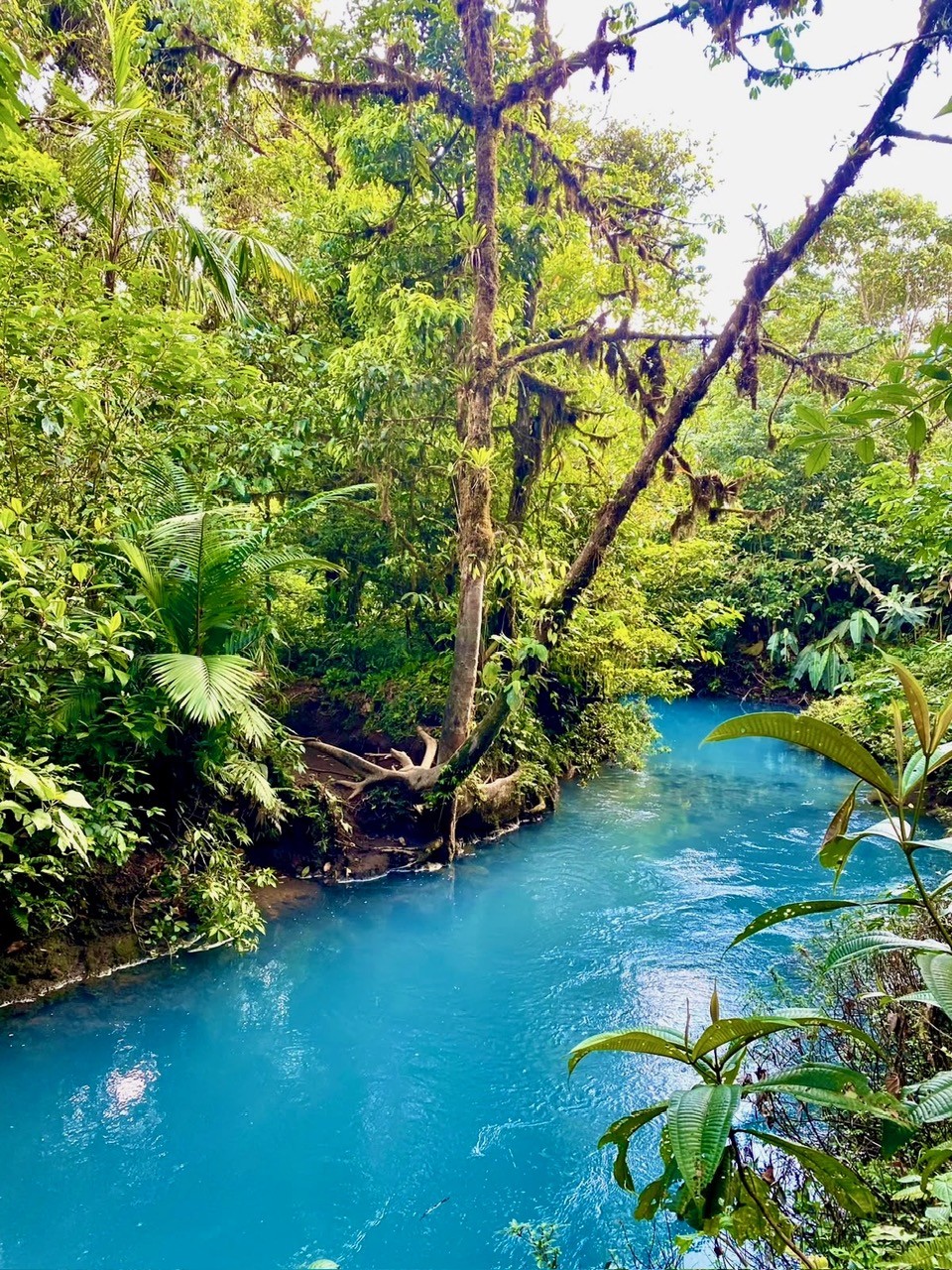
Another Africa
The word “Africa” can produce a surprisingly narrow picture in the imagination: dry grass, scattered trees and large mammals beneath an enormous sky. Zanzibar immediately breaks that image apart.
Dense tropical vegetation creates an entirely different architecture. On open plains, visibility can extend for kilometres. Inside thick vegetation, an animal can disappear behind a handful of leaves.
Humidity changes what can live there. Shade creates different temperatures over very short distances. Water can collect in tiny spaces, and the relevant habitat for a small organism may be measured not in kilometres but in centimetres.
This shift in scale changes the way we look. On the mainland, an elephant can dominate an entire scene. Here, the most interesting life may be hidden on a branch, beneath vegetation or on the surface of a single leaf.
The scale has changed.
The ecological complexity has not.
A World on a Leaf
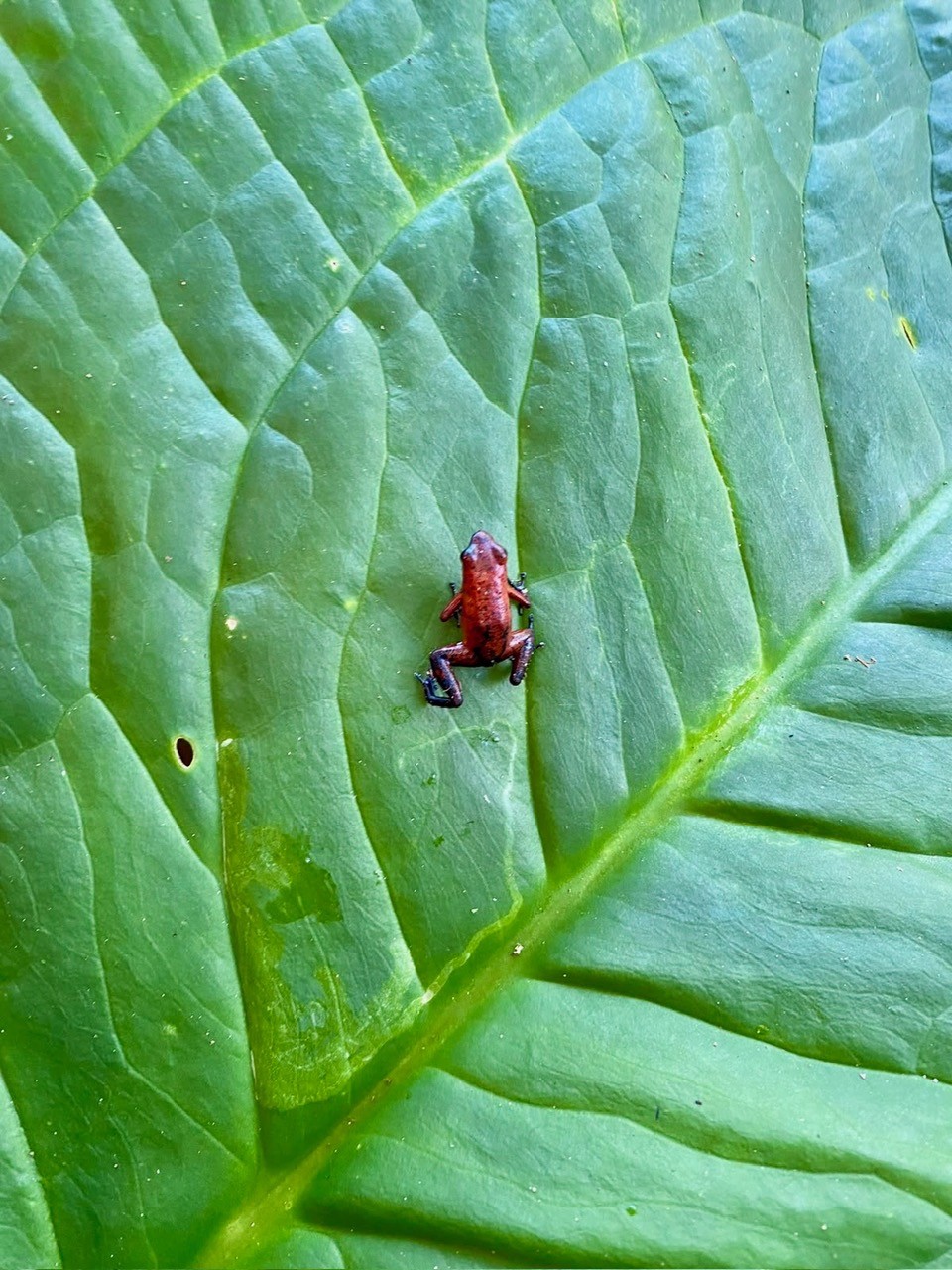
After elephants, giraffes, buffalo and hippos, it would be easy to overlook an animal small enough to rest comfortably on a leaf. That would be a mistake.
Amphibians live in unusually close contact with their environment. Their skin plays an important role in exchanges with the world around them, making moisture and local habitat conditions particularly significant.
For many species, the difference between suitable and unsuitable habitat can depend on a very specific combination of vegetation, water, shade and humidity. Changes that seem minor from a human perspective can therefore matter enormously to an animal whose entire world occupies a tiny patch of tropical vegetation.
That sensitivity is what makes the photograph so interesting. After spending days looking across huge African landscapes, suddenly the ecological story had contracted to the surface of a leaf.
An elephant can alter vegetation on a scale visible from far away. An amphibian may live within a world of droplets, stems and shadows. Both are products of adaptation to the conditions around them, and both depend on systems much larger than themselves.
Size is a poor measure of ecological significance.
The Ocean at the End of the Road
Eventually, the landscape opened again.
But this time there was no savannah on the horizon.
There was sea.
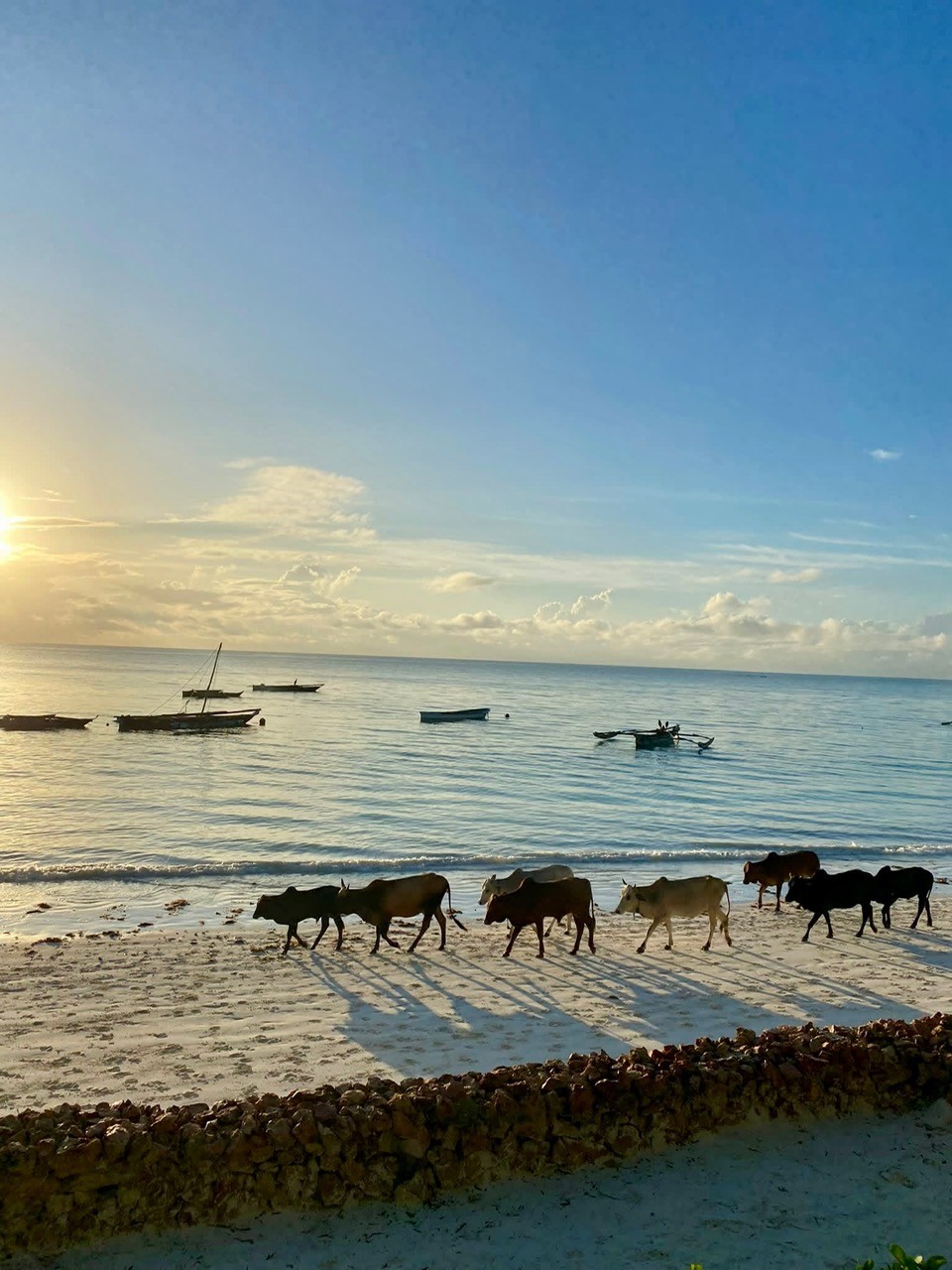
Cattle walked along the sand while small boats floated offshore. After days of watching wild animals move through enormous landscapes, the scene felt unexpectedly ordinary.
Perhaps that was precisely why it was so memorable.
Here, animals, people, boats, ocean and everyday life occupied the same frame. The Indian Ocean has shaped Zanzibar for centuries, connecting the islands to mainland East Africa and to maritime worlds far beyond the horizon.
The sea also introduces another rhythm: the tide. Water repeatedly advances and retreats, shifting the boundary between marine and terrestrial space. Boats, coastal activity and animals using the shore all exist within a landscape whose edge moves every day.
It was another reminder that landscapes are not photographs waiting to be taken. They are places in constant use, shaped by physical processes and inhabited by both wildlife and people.
The journey had begun inside the walls of an ancient volcano and now ended beside an ocean.
Between them lay almost every scale of life we had learned to notice.
The Great African Mosaic
Looking back, it would be easy to remember the journey as a collection of extraordinary animals: giraffes, elephants, zebras, buffalo, hippos and monkeys. Photography encourages that way of remembering. We isolate a subject inside a frame and, for a fraction of a second, make it appear as though nothing else exists.
But nothing we photographed truly existed alone.
The zebras depended on grass, and the grass depended on rain, soil and sunlight. The giraffe occupied another layer of vegetation. Buffalo transformed numbers into protection. Elephants carried memory across generations while physically reshaping the habitats through which they moved.
Hippos crossed the apparent boundary between land and water. Vervets exchanged information inside complex social groups. At sunset, an entire community changed its behaviour as light and temperature altered the balance between opportunity and danger.
Then Zanzibar changed the scale again. Tropical vegetation replaced open plains, a tiny amphibian turned a single leaf into an ecosystem and the Indian Ocean introduced tides, coastlines and a completely different network of life.
The real story was never contained inside any one photograph.
It existed between them.
It was in the grass transformed by grazing and in the paths opened by elephants. It was in water drawing animals together, in rain deciding where vegetation could grow, in the knowledge carried by an old matriarch and in information passing from one animal to another.
It was in the chemistry protecting a hippo's skin, in the anatomy allowing blood to reach a giraffe's brain, in stripes that can interfere with a biting fly and in an amphibian whose survival depends on conditions measured on the scale of a leaf.
And finally it was in the ocean, where the terrestrial story did not end so much as meet another system.
Perhaps that is the most important thing these photographs taught us. Wildness is not a catalogue of remarkable species. It is a network of relationships between organisms, climate, water, vegetation, geology and time.
Remove enough pieces and the picture begins to change. Preserve the relationships between them, and the system retains something far more important than individual beauty: the ability to continue functioning, changing and adapting.
We arrived looking for wildlife.
By the end, we were looking for connections.
And once you begin to see them, even the emptiest landscape stops looking empty.
“The wonder was never one animal. It was everything that allowed it to be there.”
Photo Notes
Locations: Tanzania & Zanzibar
Continent: Africa
Category: Wildlife & Travel Photography
Subjects: African Wildlife, Savannah, Tropical Ecosystems
Photographer: Georgina Torres